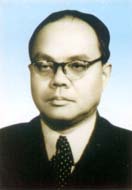
Li Qiang was a radio expert. He was a native of Changshu, Jiangsu Province. His original name was Zeng Peihong, and his courtesy name Youfan. Li was a member of the Communist Party of China. In 1923, he studied at the Department of Civil Engineering of Shanghai Donghua University (formerly Nanyang Railway Engineering and Mining College). The year 1925 witnessed him join the Communist Youth League of China. In the same year, Li joined the Communist Party of China. He once served as the secretary of CPC Changshu County Committee. Li made the first batch of radio transceivers for our party by himself in 1929 and served as the director of the CPC Central Radio Station. His success was a historic contribution to our party’s cause of radio communication. In 1931, he went to the Soviet Union and became a researcher at the Institute of the People’s Committee of Posts and Telecommunications in Moscow, with his research focus on telecommunication. In addition to the development of a high-power radio transmitter, Li committed to the study of various radio transmission antennas by using physical analysis, and worked out the calculation formula of the transmission of diamond antennas. He further studied the calculation formulas of other antennas, including ultra-low horizontal antennas and Delphi antennas. In the meantime, Li worked in the Ministry of Communications of the Communist International. After his return to China in 1937, Li served as the Deputy Director of the Bureau of Military Industry of the Central Military Commission. Concurrently, he was the Director of the Bureau of Military Industry of the Shanxi-Gansu-Ningxia-Jinsui Joint Defense Force and the President of the Yan’an Academy of Natural Sciences. In 1947, he was in charge of the telecommunication work in the liberated areas. Under his direction, high-power transmitters and directional antennas were produced. After the founding of the People’s Republic of China, Li participated in the work of taking over some provincial and municipal radio stations of the Kuomintang government. He also directed the establishment of high-power radio sets and medium-wave radio antennas. Li once served as the Director of the General Administration of Telecommunications of the Ministry of Posts and Telecommunications, the Director of the Broadcasting Administration, the Deputy Minister and Minister of the Ministry of Foreign Trade and a consultant of the State Council. Li was a delegate to the 8th National Congress of the CPC, a member of the 9th to 11th CPC Central Committee, a member of the CPC Central Committee, and a delegate to the 3rd to 5th National People’s Congress. He made many groundbreaking or pioneering contributions to a number of fields, namely scientific research, military production, radio and telecommunications and foreign trade. In 1955, Li was elected as an academician of the Chinese Academy of Sciences (Member of the CAS).





