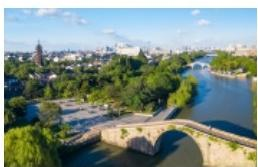

The Grand Canal flows across Suzhou on a section of about 96 km and spills into the city's crisscrossing waterways. 4 ancient canals and 7 sites along the Grand Canal within Suzhou have achieved World Heritage status.
Anclent canals
Shantang canal, Shangtang canal, Xujiang canal, Suzhou Moat
Attractions
Shantang Street Historical and Cultural Block, Yunyan Temple Pagoda on Tiger Hill, Pingjiang Road Historical and Cultural Block, Quanjin Guild Hall,Panmen Gate, Baodai Bridge, Old Towpath of Wujiang District.
Pingjiang Historical and Cultural Block (平江历史文化街区)
Pingjiang Road is Suzhou's most well-preserved ancient street. Over this 1-km stretch of bridges and canals, you'll find the residences of many historical figures, museums, bookshops and cafes. Over 8000 people still live there, enjoying its rich history and soothing environment. It's best to visit inthe moming,as Pingjiang road, like the whole world, belongs to those who rise early.
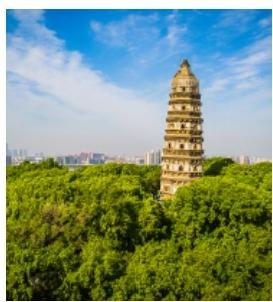
Yunyan Temple Pagoda (云岩寺塔)
Yunyan Temple Pagoda on Tiger Hill (Huqiu), the Pisa Tower of China, is actually more than 200 years older than its Italian sister. Due to its robus octago-nal supports made of brick and timber, the leaning pagoda has stood tall for centuries. Fun fact: the first 6 stories are slightly slanted, but the 7th is perfectly straight.
Shantang Historical and Cultural Block(山塘历史文化街区)
Abutting the Tiger Hill, you can take a walk and enjoy the view on Shantang Street, a 1100-year-old paved segment stretching alongside the canal and flanked by shops, tea houses, theater stages, pubs and cafes. If you enjoyed it by day, come here atnight too, hop in a boat to find a completely different scene.
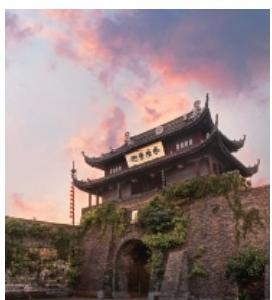
Panmen Gate(水陆盘门)
A top the rampart of Panmen Gate, you'll have a full view of both Land and Water Gates. In old times, the gates played a central role as a route for trade and communication and a protection against invaders. This set of hybrid gates is a rarity in China. Do not miss what people here call “the Three Sights”of Panmen: The Land and Water Gates, the Wumen Bridge and the Ruiguang Pagoda.
Baodai Bridge(宝带桥)
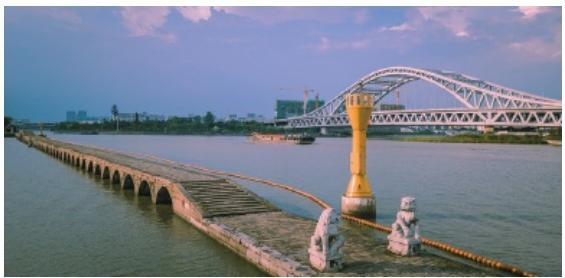
The Baodai Bridge, or the Precious Belt Bridge, has over 1200 of history. Its multiple arches, its length and its sophisticated design make this bridge the uncontested champion of the Grand Canal. Every year around the Mid-autumn Festival, when the moonlight shines through its 53 openings, the Baodai Bridge is the cynosure of all eyes. This truly is a sight to behold!
Quanjin Guild Hall(China Kunqu Opera Museum) 全晋会馆(中国昆曲博物馆)
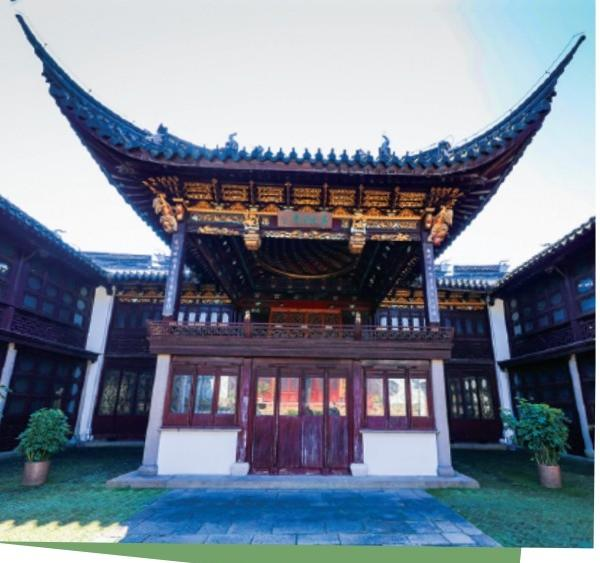
This hall was built by merchants from the North of China topromote business in the region. The architecture is a perfect blend of Hui Style architecture and Northern courtyards. The ancient outdoor stage is the central piece of this building complex, covered by a splendid domelike ceiling adorned with carved wooden panels, which, aesthetics aside, also serves to amplify the sounds and to create a lingering echo.
Old Towpath of Wujiang District(吴江古纤道)
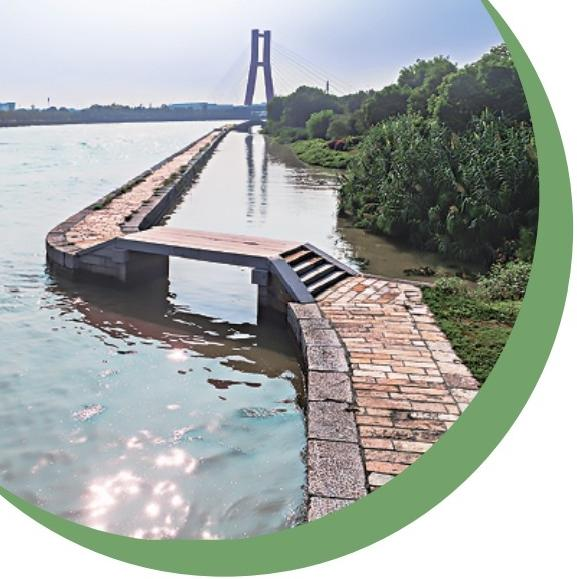
In ancient times, the canal of Suzhou was a hive of activity. Towpaths were built so that passing boats could come to shore. The old towpath of the Wujiang District, built in 810 AD, is the only one that remains to this day. Its position as a partition between the lake and the canal has earned it the nickname of Floating Great Wall.