


As chronicled in Records of Wu (Wu Di Ji), the capital city built by King Helv of Wu was designed to be surrounded by “eight land gates, aligning the Eight Winds of Heaven; and eight water gates, corresponding to the Eight Trigrams of Earth.” The eight land gates are Changmen Gate and Xumen Gate in the west, Panmen Gate and Shemen Gate in the south, Loumen Gate and Jiangmen Gate in the east, and Pingmen Gate and Qimen Gate in the north. Names for the eight gates varied across historical records. According to A Sequel to the Illustrated Treatise of Wu Prefecture, there was no Pingmen Gate. But Fengmen Gate did exist. Pingmen Gate actually bore the alternative name Wumen Gate, yet both Pingmen Gate and Chimen Gate were not included in the above mentioned eight gates. During the Wu period, the gates on the east side of the city were locked, as a measure to prevent invasions conducted by the State of Yue. All the eight gates were open during the Tang Dynasty. In the early Northern Song Dynasty, Shemen Gate and Jiangmen Gate were filled and closed, leaving the six gates of Changmen Gate, Xumen Gate, Panmen Gate, Fengmen Gate, Loumen Gate, and Qimen Gate open for public use. In the Southern Song Dynasty, for the sake of defense, only five of the gates remained open. When the rebel leader Zhang Shicheng took Suzhou in the late Yuan Dynasty, he added Yuecheng (meaning “barbicans”) to the six gates. These barbicans were later dismantled after the Taiping Heavenly Army captured the city. These fortifications at the five gates, namely Fengmen Gate, Loumen Gate, Qimen Gate, Xumen Gate, and Changmen Gate, were restored when the Qing government recaptured the city.
Changmen Gate is located on Xizhongshi Road, Gusu District, Suzhou, and lies northwest of the city. It has long been one of the symbols of Suzhou since ancient times. According to Spring and Autumn Annals of Wu and Yue (Wu Yue Chun Qiu), “Changmen Gate was erected to symbolize Changhe, the Heavenly Gate, and intend to attune with the Cosmic Energy.” Hence, it was also named Changhe Gate. When King Helv led his troops through this gate on an expedition against the State of Chu, he renamed it as “Po Chu Gate”, meaning “the gate of conquering the State of Chu”, to express his unwavering determination to defeat it.
Changmen Gate was first built during the Spring and Autumn Period when the State of Wu constructed its capital city known as Helv Da Cheng (meaning “the Great City of King Helv). As recorded in Annuals of the Suzhou Prefecture (Suzhou Fu Zhi), the Gate was renamed Jinchang Gate after its reconstruction in the Yuan Dynasty. Inside the Gate, the Jinchang Pavilion was built. However, “local people had long been accustomed to calling it Changmen Gate, and it cannot be altered freely.” This old name thus stayed in use. In the early Qing Dynasty, the gate tower was renovated with a plaque installed on which the four characters “Qi Tong Chang He” were inscribed, meaning “attune with the Cosmic Energy.”
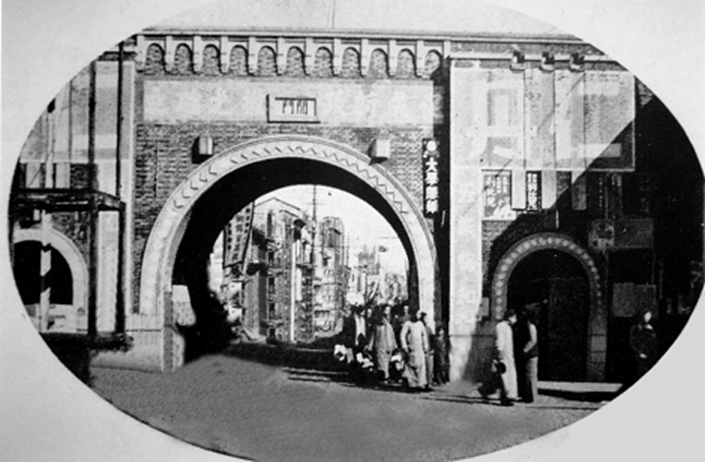
Photo 1: A snapshot of Changmen Gate in the 1930s from the book A Century through Lens
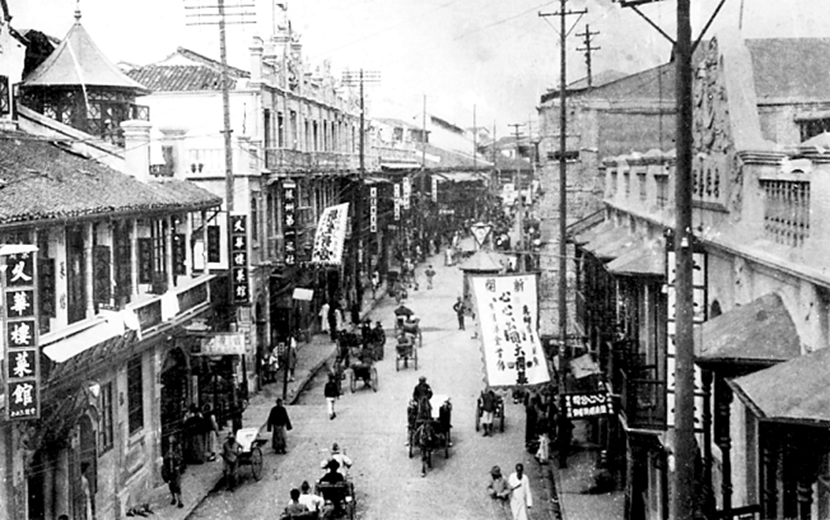
Photo 2: The Shilu area near Changmen Gate in the Republican period, featuring densely packed buildings and a wide assortment of shops
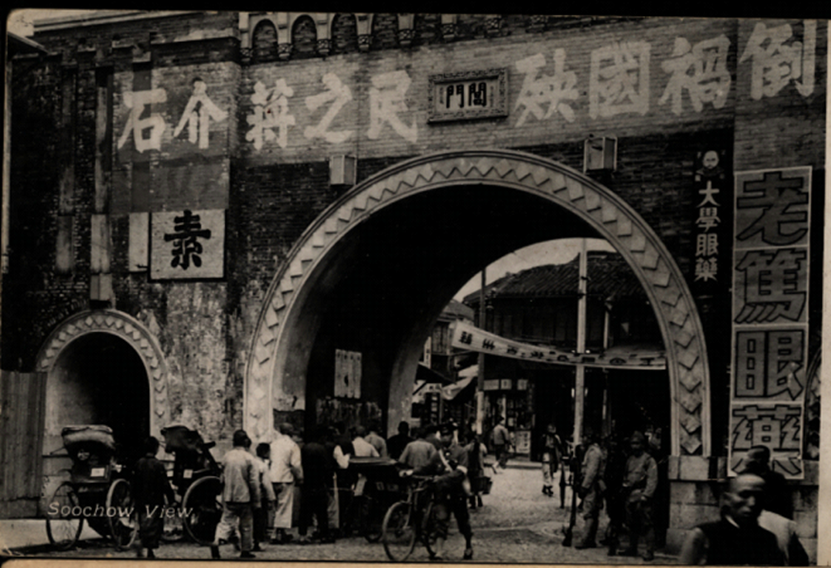
Photo 3: Changmen Gate, located in the northwest of the city, was named after the celestial gate “Changhe” in folklore, expressing people’s wish to bear some connection with the Cosmic Energy. Its gate tower built in early Qing Dynasty bore the plaque “Qi Tong Changhe.” In 1934, the Gate was remodeled by following the style of the Romanesque city gate, imitating the Jimen Gate. This version was demolished in the 1950s. This picture shows Changmen Gate during the period of the War of Resistance against Japanese Aggression when the city fell to the Japanese.
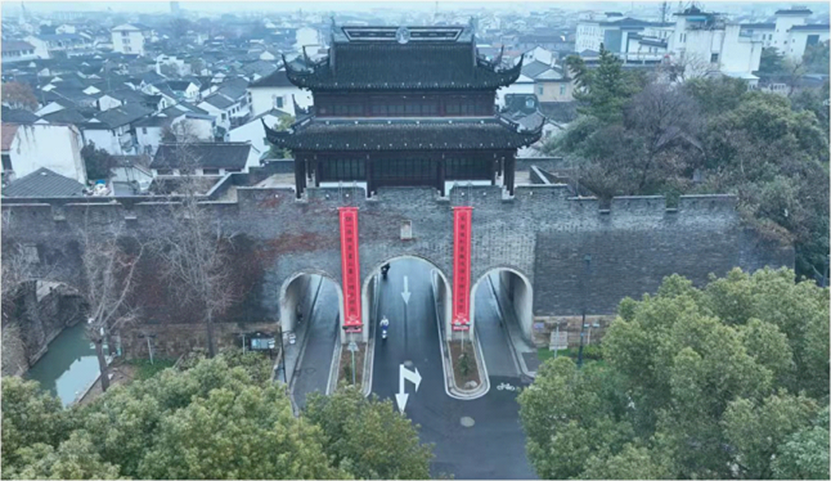
Photo 4: A huge Spring Festival couplet hanging on the city wall of Changmen Gate (taken in 2022)
The renowned Changmen Gate has been the embodiment and microcosm of the ancient Suzhou city through the ages. As documented in Records of Wu authored in the Tang Dynasty: “When climbing to the top of the mountain, Confucius took in the view of Changmen Gate of the Wu State, and exclaimed, ‘There is white mist streaming around the gate of Wu like a silk sash.’” The opening chapter of The Dream of the Red Chamber describes “Changmen as one of the two or three wealthiest and most fashionable quarters in the world of men.” In fact, this description refers to the thriving market outside the Gate. In those days, the area outside Changmen Gate was characteristic of “heaped goods resembling small hills, large crowds thronging to and fro, and colorful shop signs dazzling like brocade.”
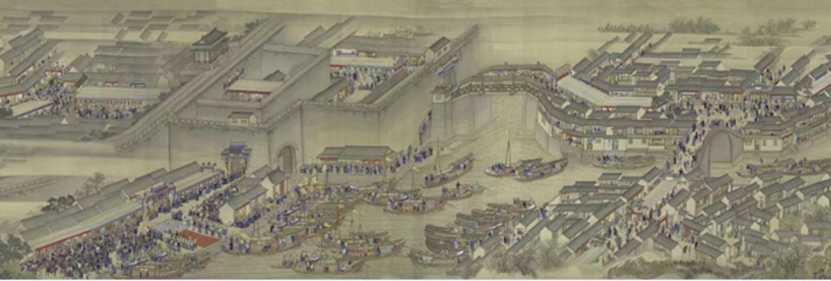
▲ The above scene of Changmen Gate is the 7th scroll in the 12-scroll “Emperor Kangxi’s Southern Inspection Tour,” a court painting work by Wang Hui, Yang Jin, and some other painters of the Qing Dynasty.
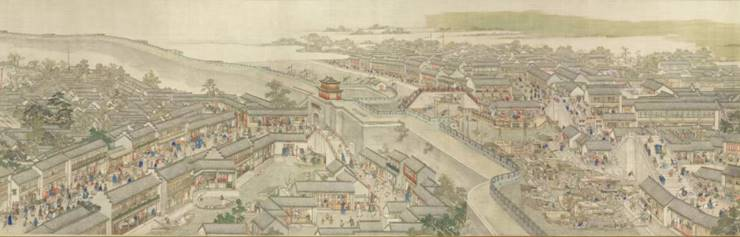
▲The above painting featuring Changmen Gate, a color-on-paper painting by Xu Yang of the Qing Dynasty, is the 6th scroll of the 12-scroll court painting “Emperor Qianlong’s Southern Inspection Tour.”
Changmen Gate is much more than a city gate. It serves as a witness to the history of Suzhou and a microcosm of the vicissitudes the city has undergone. Today, when taking a walk around Changmen Gate, one can see the ancient gate and the modern business district exist in perfect harmony. This view may evoke images of the distant past, when boats thronged the waterways and merchants gathered in droves. Like a silent guardian, Changmen Gate quietly narrates Suzhou’s long history and glorious legacy.
