The Origin and Craft of Suzhou Embroidery
Suzhou-style embroidery, known as Suzhou Embroidery or Su Xiu, is a traditional handicraft of Suzhou. It has long been celebrated for its delicacy, refinement, and elegance. Suzhou embroidery works are characteristic of distinct themes, lively imagery, and profound artistic conception. The color palette is fresh and subdued, aiming to achieve a balance between over-restraint and garishness. The overall effect is that the rich colors appear vibrant yet not gaudy, while light tones remain elegant but never plain. Together with Hunan Embroidery (Xiang Xiu), Guangdong Embroidery (Yue Xiu), and Sichuan Embroidery (Shu Xiu), Suzhou Embroidery is honored as one of the “Four Great Embroideries of China.”
During the Song Dynasty, skills of Suzhou-style embroidery underwent substantial improvement. The sutra wrappers unearthed from the Huqiu Pagoda and Ruiguang Pagoda in 1956 and 1978 bear a variety of patterns, including rhombus flowers, lotuses, and interlaced vines. Stitches employed to create these embroidery works involved puzhen (satin stitch) and xiechanzhen (slanting twining stitch). At the same time, the technique of three-color thread shading was adopted as well. These pieces demonstrate incredible skills of the art. Embroidery pieces intended for appreciation also came into the scene during this period. In 1964, embroidered fragments from garment edges were unearthed from the tomb of Cao-shi (“a woman whose surname was Cao”), mother of Prince Zhang Shicheng, in the southern suburbs of Suzhou. These pieces demonstrate that in the Yuan-dynasty pattern of four dragons and cloud motifs involved nine embroidery stitches, for example jiezhen (joining stitch), chanzhen (twining stitch), and shimaolinzhen (fur-and-scale stitch). During the Ming Dynasty, Suzhou became a center of the silk weaving industry. The imperial court established the Weaving and Dyeing Bureau in the city, which included an embroidery workshop that gathered skilled artisans for specialized production. By then Suzhou embroidery had already developed its own distinct features in terms of materials, stitches, and color application. Wang Ao, in his Gusu Zhi (The Gazetteer of Gusu) compiled during Emperor Zhengde’s reign, praised Suzhou embroidery as being “exquisite, refined, elegant, and neat, and these traits define the art.” In the Qing Dynasty, Suzhou embroidery further advanced on the foundation of the achievements made during the Ming Dynasty. Records noted that “Suzhou embroidery is distinguished by its striking craftsmanship, which can capture life with rigorous fidelity, and the extraordinary effect is unmatched elsewhere.” The Qing court set up the Weaving and Manufacturing Bureau in Suzhou to supervise the production and allocation of brocades, satins, damasks, kesi (silk tapestry), and embroideries. Subsequently, embroidery making for commercial purposes gradually developed into an established industry in Suzhou.
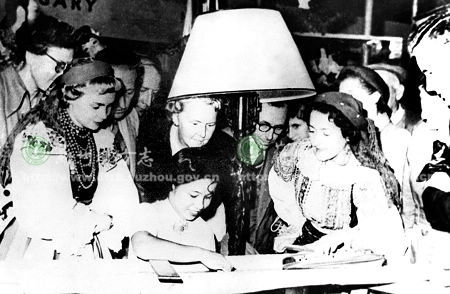
▲ Gu Wenxia, a member of the Suzhou Embroidery Craft and Production Cooperative, went to London, U.K. to participate in the International Handicrafts Exhibition in September 1956. Gu demonstrated embroidery skills at the event.
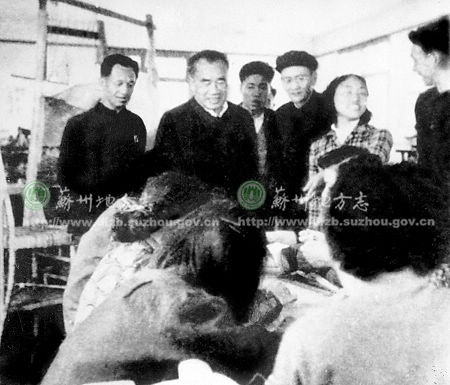
▲Vice Chairman Zhu De inspected Suzhou and visited the Suzhou Embroidery Craft and Production Cooperative on April 17, 1958.
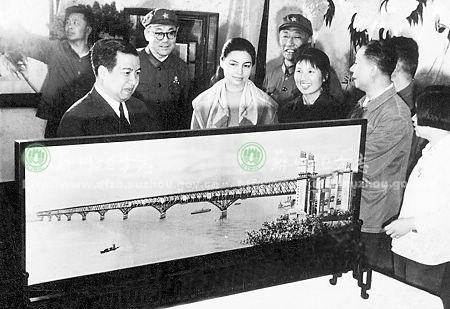
▲ Norodom Sihanouk, the Cambodian Head of State, visited the Suzhou Embroidery Research Institute in 1971 during his tour of Suzhou.
Evolution of Suzhou Embroidery
During the late Qing Dynasty and early Republic era, the sciences, literature, and arts of the western world were introduced into China, infusing new vitality into traditional Chinese fine arts. Shen Shou, a Suzhou embroidery artist pioneered “simulated embroidery” (fangzhen xiu) by integrating Western painting techniques which emphasized light, shadow, and perspective into traditional Chinese embroidery. Her works such as a portrait of Jesus and a portrait of the Queen of Italy Elena were presented as state gifts to Italy and created a sensation.
After the founding of the People’s Republic of China, Suzhou’s embroidery industry adhered to the Party and government’s policy of “preservation, development, and advancement.” Hence, the industry underwent reorganization and embroidery production was restored. In May 1950, the Suzhou Embroidery Guild was established. In September 1952, the Suzhou Embroidery Technical School was founded. The year 1954 saw the Suzhou Federation of Literary and Art Circles establish the Embroidery Group under its Folk Art Research Section. The China Artists Association then commissioned the Group to produce a batch of embroidery works for an exhibition of gifts for overseas customers. By 1956, thirteen embroidery production cooperatives had been formed, among which the Arts and Crafts Production Cooperative, developed from the earlier embroidery group, focused on the research and production of artistic embroidery pieces. On the basis of the original embroidery production cooperatives, several entities were successively established between 1958 and 1970, including the Suzhou Theatric Costumes and Props Factory, the Suzhou Su Embroidery Cooperative Factory, the Suzhou Children’s Products Production Cooperative, the Suzhou Embroidery Products Factory, and the Suzhou Embroidery Research Institute.
By 1985, Suzhou’s embroidery industry comprised five factories and one research institute, including the Suzhou Embroidery Research Institute and the Suzhou Embroidery Factory.
However, computer-controlled embroidery technology soon found widespread application in the industry. As a result, the number of embroidery inheritors with superb craftsmanship and exquisite Suzhou embroidery masterpieces gradually grew less. The industry became increasingly concentrated in the old city area of Suzhou and Dongzhu Town in Suzhou New District as well as Zhenhu Subdistrict in the same district after the 1990s. In 2001, the master Gu Wenxia’s studio was established. The year 2005 witnessed Suzhou embroidery included in the first batch of recommended items for the National Intangible Cultural Heritage List. Its techniques were listed under the arts and crafts category of Suzhou’s first municipal-level Intangible Cultural Heritage List. The units responsible for its protection and research are the Suzhou Embroidery Research Institute Co., Ltd., the Suzhou Su Embroidery Art Museum, and Zhenhu Subdistrict in Huqiu District of Suzhou New District.
Suzhou embroidery gained approval from the State Council and was thus included in the first batch of China’s National Intangible Cultural Heritage List on May 20, 2006. The Suzhou embroidery base located in Zhenhu Subdistrict was designated in 2007 as a provincial-level “Traditional Fine Arts and Crafts Industry Base.” In 2010, the General Administration of Quality Supervision, Inspection and Quarantine of PRC approved the implementation of geographical indication protection for “Zhenhu’s Suzhou Embroidery,” and a set of local standards titled Geographical Indication Products—Zhenhu’s Embroidery was introduced accordingly. In 2013, the Zhenhu Embroidery Gallery Scenic Area of Suzhou New District became the first national 4A-level tourist attraction in China focusing on embroidery-themed cultural industry. The year 2014 saw Zhenhu Embroidery Art Gallery listed by the Ministry of Culture and Tourism as part of the second batch of national-level group of demonstration bases for the productive conservation of intangible cultural heritage. Wang Hongjun is the intangible cultural heritage inheritor of meihua zhuanzi, the seal script whose individual characters feature the shape of plum blossoms. In 2015, embroidery master He Jianying adapted Mr. Wang’s works into an embroidered version.
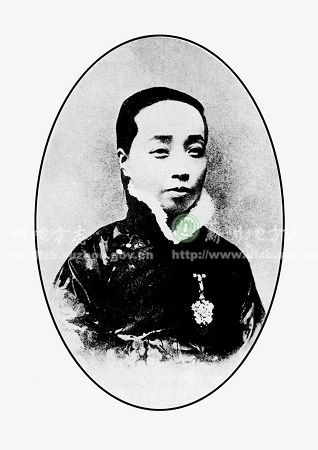
▲ Shen Shou (1874–1921), a native of Suzhou originally named Yunzhi, excelled in embroidery. With the support of her husband Yu Jue, she integrated Western painting techniques emphasizing light, shadow, and perspective to create “simulated embroidery” (Fangzhen Xiu). Her works won numerous awards both at home and abroad, earning her the title of “Goddess of the Needle.”
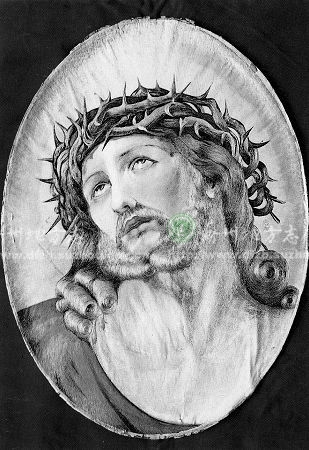
▲ Shen Shou’s embroidery work “A Portrait of Jesus” was exhibited at the Panama-Pacific International Exposition held in San Francisco, USA. It was awarded the First Prize, which marked the first time that a Chinese embroidery work had ever received the highest honor at a world exposition.
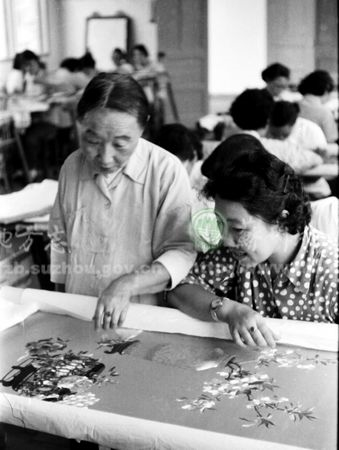
▲ The picture, taken in 1965, shows Jin Jingfen, director of the Suzhou Embroidery Craft Production Cooperative, imparting embroidery techniques.
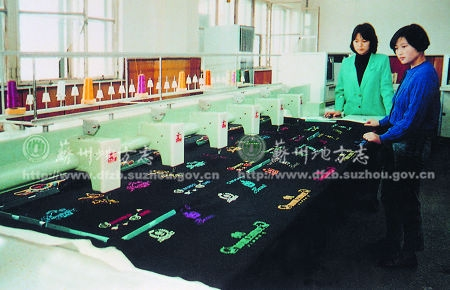
▲ The photo, taken in November 1988, features a domestically produced computer-controlled embroidery machine and its programming system. This achievement resulted from was a successful joint development between the Suzhou Arts and Crafts Research Institute and Factory 267.
Masterpieces of Suzhou Embroidery
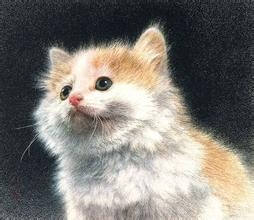
▲ A Cat
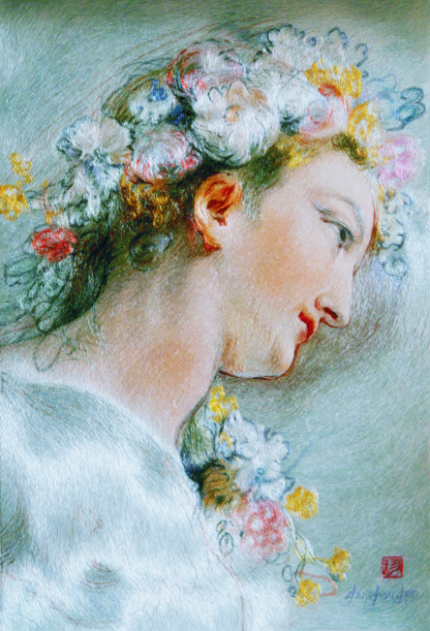
▲ The Girl with a Garland
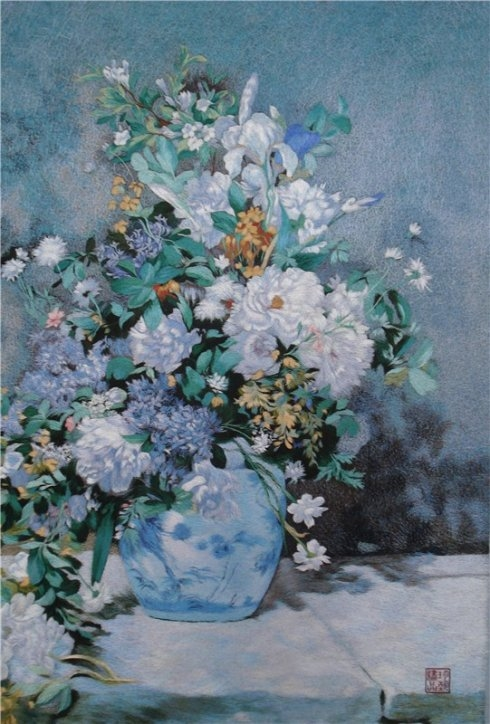
▲ Flowers in a Blue Vase
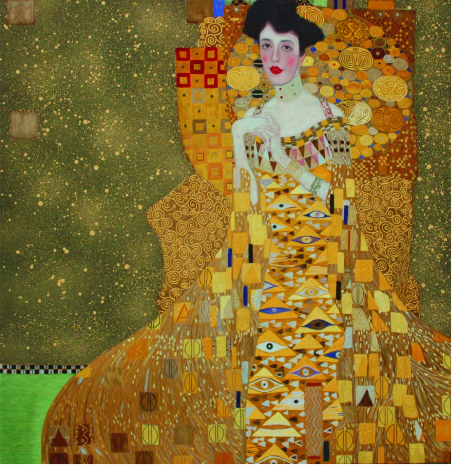
▲ Portrait of Adele Bloch-Bauer 1
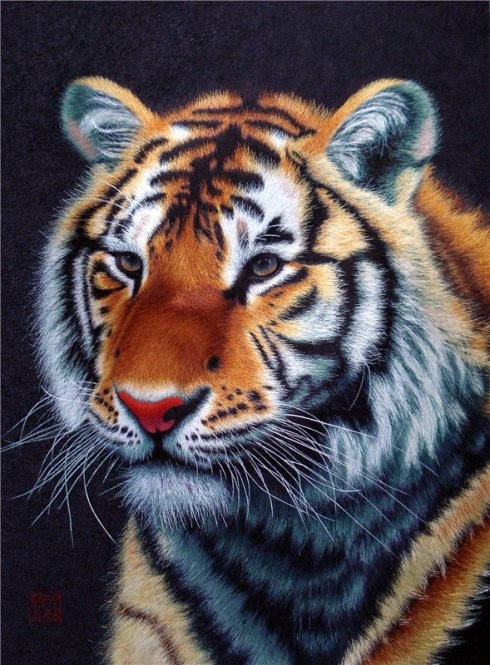
▲ The Tiger