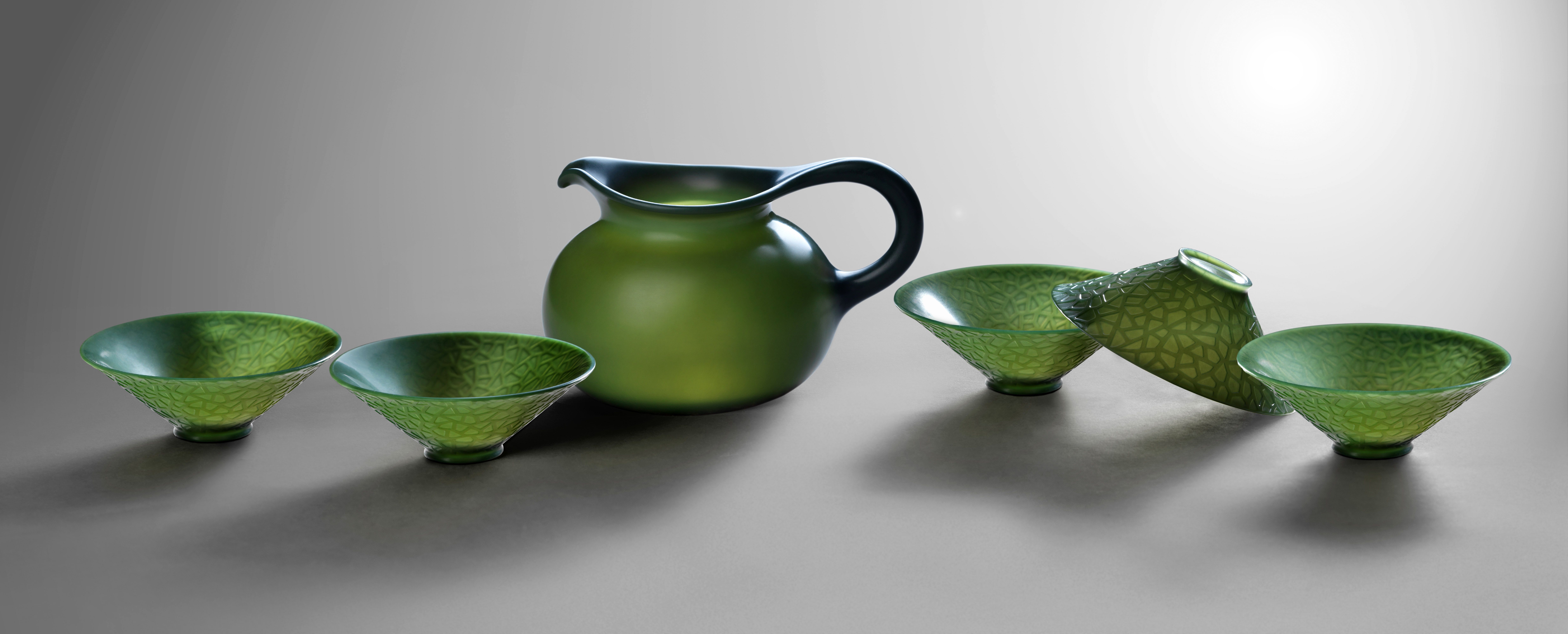
Archaeological evidences showed that jade carving appeared in Suzhou around six to seven thousand years ago. In the book Exploitation of the Works of Nature written by famous Chinese scientist Song Yingxing (1587-1663) in the Ming Dynasty (1368-1644), “Suzhou ranks the first in jade carving craftsmanship despite the fact that the capital has the most jades”. Suzhou jade carving deals with white and green jades in most of the time. Suzhou craftsmen specialize in carving small and medium sized jade works, which are prominent for being "small, smart, ethereal, and exquisite". "Smart" refers to the inventive ideas for carving, especially the clever use of color and carving skills; "Ethereal” refers to the ingenuous quality of the carver who may endow the work with a special soul. "Exquisite" refers to the fineness of cut and polish. Since the Ming Dynasty, a good many talented jade carvers emerged in Suzhou. Among them, the most famous is Lu Zigang , who is regarded by many as the founder of the jade industry in China.
Inheritor of National Intangible Cultural Heritage Jade Carving: Yang Xi.