


Origin of the Wu School of Painting
Suzhou has long boasted for its numerous artists. According to Xu Tanqiu’s Wumen Huashi (A History of Wu School Painting), there were more than 1,200 painters who were active from the Western and Eastern Jin Dynasties through the late Qing Dynasty. After the mid-Ming Dynasty, local artistic creation reached its peak. Masters such as Shen Zhou, Wen Zhengming, Tang Yin, and Qiu Ying emerged in succession to dominate the painting circles and were regarded as the “Four Masters of the Ming Dynasty.” Disciples and descendants of Shen Zhou and Wen Zhengming—Chen Daofu (Baiyang), Lu Ye, Zhou Wenmian, Wang Guxiang, Wen Jia, Zhou Tianqiu, Wen Boren, Qian Gu, Lu Shidao, Xie Shichen, and Ju Jie—achieved preeminence in the painting circles as well. The simultaneous appearance of so many renowned painters in one region was rather rare in Chinese art history. This group of artists were later referred to as the “Wu School of Painters” or the “Wumen School.” The name first appeared in Dong Qichang’s inscription for Du Qiong’s Album of the Cottage in the South Village during the Ming Dynasty. Masters of the Wu School all excelled in poetry, literature, calligraphy, painting, and seal carving. Their works featured a strong scholarly elegance due to their pursuit of refinement and detachment. Some critics called this style “literati painting.” This artistic approach, promoted by Chen Jiru and Dong Qichang, exerted an increasingly significant influence over time. Consequently, Shen Zhou, Wen Zhengming, Chen Jiru, and Dong Qichang were later referred to as the “Four Masters of the Wu School,” whose impact extended throughout the Qing Dynasty.
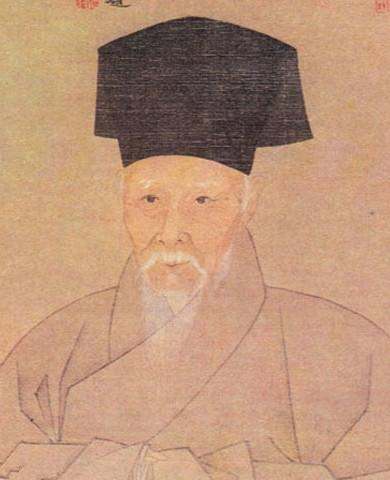
▲ Shen Zhou (1427–1509) was a native of Changzhou (present-day Suzhou, Jiangsu Province). With the courtesy name of Qinan, he was known by a number of literary names such as Shitian, Baishiweng, Yutiansheng, and Youzhuju Zhuren. As a master painter of the Ming Dynasty, Shen Zhou was a founder of the Wu School of Painting, and one of the Four Masters of the Ming Dynasty.
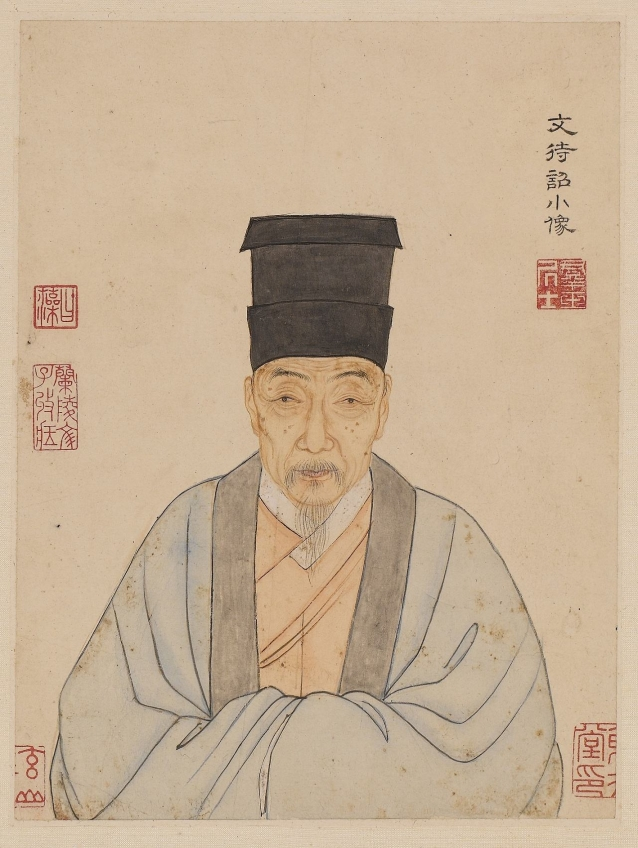
▲ Wen Zhengming (1470–1559) was a native of Suzhou, originally named Bi (“壁”) which some people would write as “璧.” He was well known for the courtesy name Zhengming. He was an outstanding painter, calligrapher, Daoist, and man of letters in the Ming Dynasty. Wen was also a founder of the Wu School of Painting, and one of the Four Masters of the Ming Dynasty.
▲Tang Yin (1470–1524), a native of Wu County, Suzhou Prefecture (the present-day Suzhou). His courtesy name was Bohu, and later changed to Ziwei. Tang Yin also used literary names such as Liuru Jushi (Recluse Scholar of Liuru), Taohua Anzhu (Master of Peach Blossom Cottage), Luguo Tangsheng (Tang Scholar from the State of Lu), and Taochun Xianli (Transcendent Official Who Flees for Meditation). He was a renowned painter, calligrapher, and poet of the Ming Dynasty. Tang Yin was a founder of the Wu School of Painting, and one of the Four Masters of the Ming dynasty.
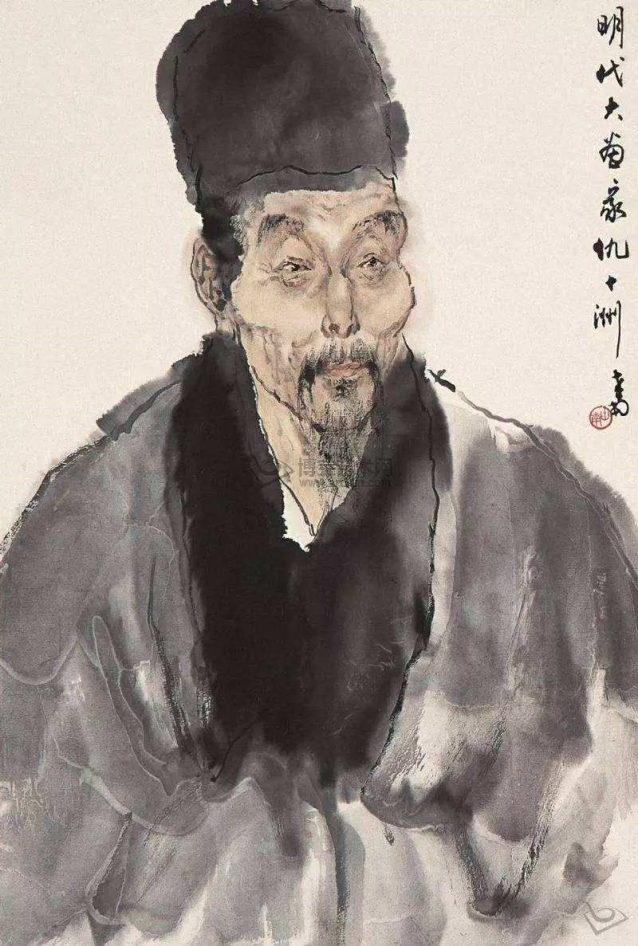
▲ Qiu Ying (1498–1552) was a native of Suzhou. He used the courtesy name Shifu, and was known by his literary name Shizhou. With his ancestral origin in Taicang, Jiangsu, Qiu later relocated to Suzhou. Being a master painter of the Ming Dynasty, he was a founder of the Wu School of Painting, and one of the Four Masters of the Ming Dynasty.
Development of the Wu School of Painting
The Wu School of painting reached its peak spanning over a period of 130 years from the Tianshun, Chenghua, Hongzhi, Zhengde, Jiajing, and Longqing reigns through the mid-Wanli era. After this period until the end of the Ming Dynasty, renowned painters kept emerging in Suzhou, including Chen Luo, Qian Gong, Sun Zhi, Liu Yuanqi, Chen Huan, Yuan Shangtong, Wen Congjian, Wen Zhenheng, and Wen Shu. They were all masters of the brush and enjoyed considerable fame. As Qian Qianyi remarked, “The legacy and influence of the earlier masters of the Wu School still endure today; it cannot be said that their artistic tradition was cut off after five generations, which may endure beyond the typical circle of decline.”
After the Qing Dynasty, Suzhou’s economy further developed. The Wu School of Painting nurtured a number of sub-schools. The “Songjiang School,” “Loudong School” of Taicang and the “Yushan School” of Changshu emerged successively. Their representative figures Wang Shimin, Wang Jian, Wang Hui, and Wang Yuanqi were known as the “Four Wangs” in the painting circles. Together with Yun Nantian and Wu Li, the four of them were collectively called the “Six Masters of the Qing Dynasty.” The disciples of the “Four Wangs” were great in number. Painters of later generations such as Wang Yu, Wang Su, Wang Jiu, and Wang Chen were all landscape painters and were referred to as the “Junior Four Wangs.” Their sons, nephews and other descendants, including Wang Sanxi, Wang Tingyuan, Wang Tingzhou, and Wang Mingshao, succeeded in carrying on the family tradition as well and were known as the “Later Four Wangs.” It can be said without exaggeration that a legacy of excellence was passed down and enhanced across the succeeding generations. Significantly influenced by Dong Qichang, the “Four Wangs” placed great emphasis on traditional techniques. At the same time, they integrated techniques of various artistic schools of the Song and Yuan Dynasties to form a coherent theoretical and practical framework for landscape art.
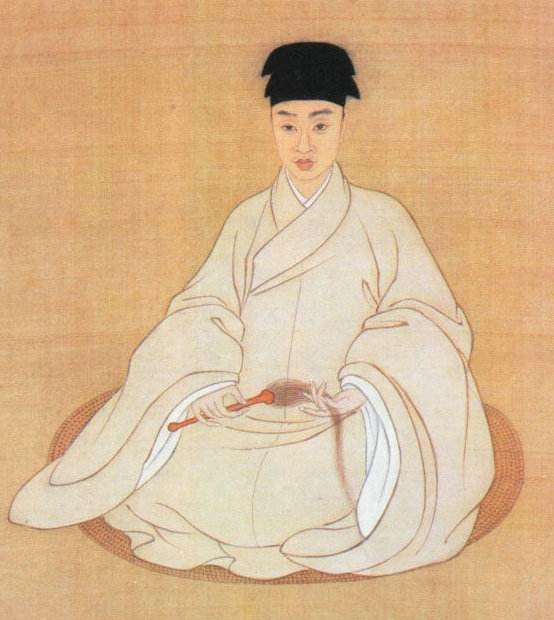
▲ Wang Shimin (1592–1680) was a native of Taicang, Suzhou Prefecture. His original name was Wang Zanyu, with the courtesy name Xunzhi. The man was also known by the literary names Yanke, Ouxie Daoren, and later Xilu Laoren. He was a painter active during the late Ming and early Qing Dynasties. His grandfather was Grand Secretary Wang Xijue and his father was the Hanlin compiler Wang Heng. Wang Shimin was one of the first-generation figures among the “Four Wangs” of the Wu School of Painting.
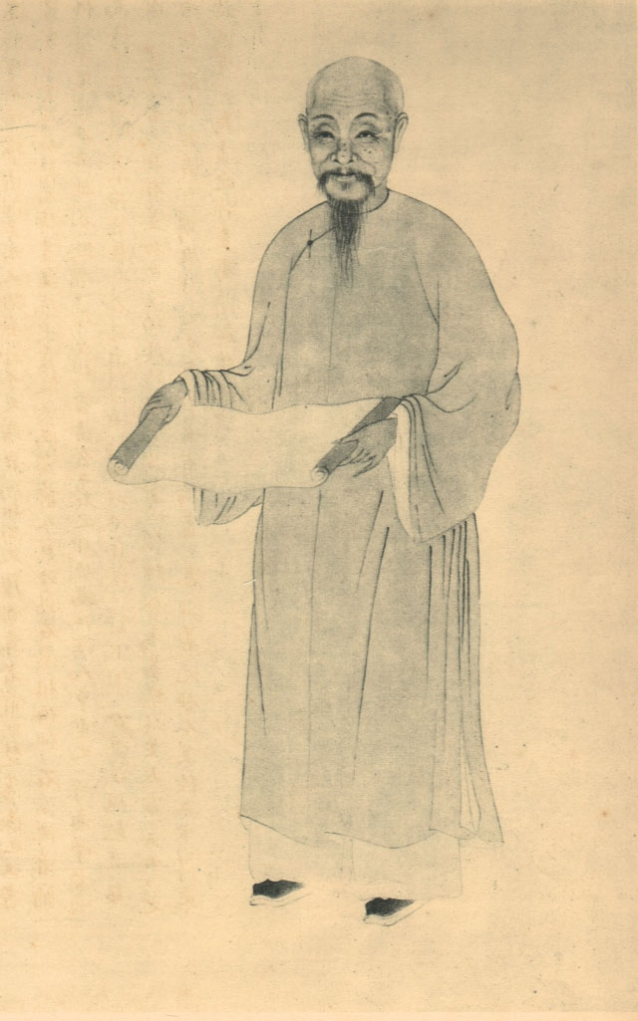
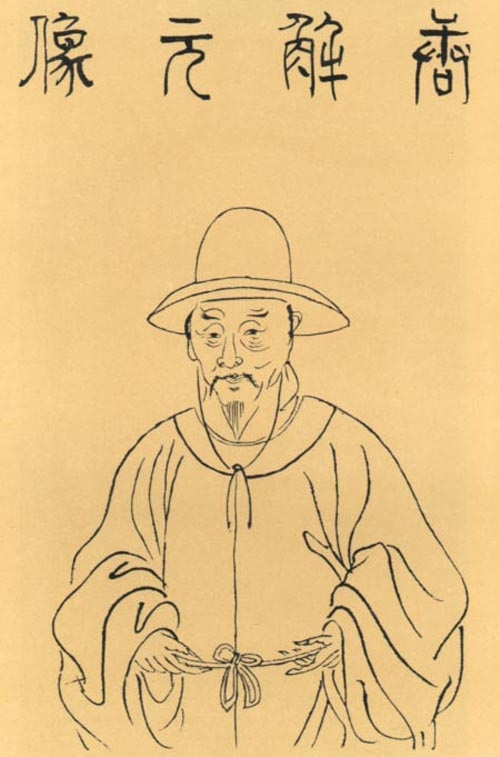
▲ Wang Jian (1598–1677) was a native of Taicang, Suzhou Prefecture. His courtesy name was Yuanzhao (“元照” also written as Yuanzhao “圆照”). He went by the literary names Xiangbi and Xiang’an Zhu. Wang Jian was a painter of the late Ming and early Qing Dynasties and one of the “Four Wangs” of the Wu School of Painting.
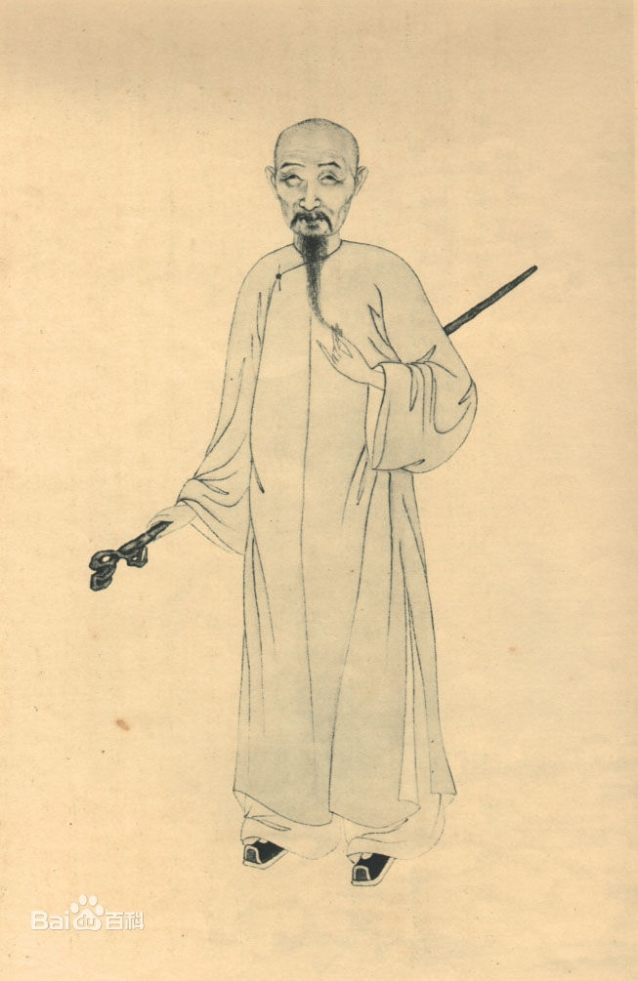
▲ Wang Hui (1632–1717) was a native of Changshu, Suzhou Prefecture. His courtesy name was Shigu, and also known by the literary names Gengyan Sanren (Leisurely Farmer of Ploughing Mist), Jianmen Qiaoke (Woodcutter of Sword Gate), Wumu Shanren (Hermit of Wumu Mountain), and Qinghui Laoren (an old man of Clear Radiance), etc. He was one of the “Four Wangs” of the Wu School of Painting.
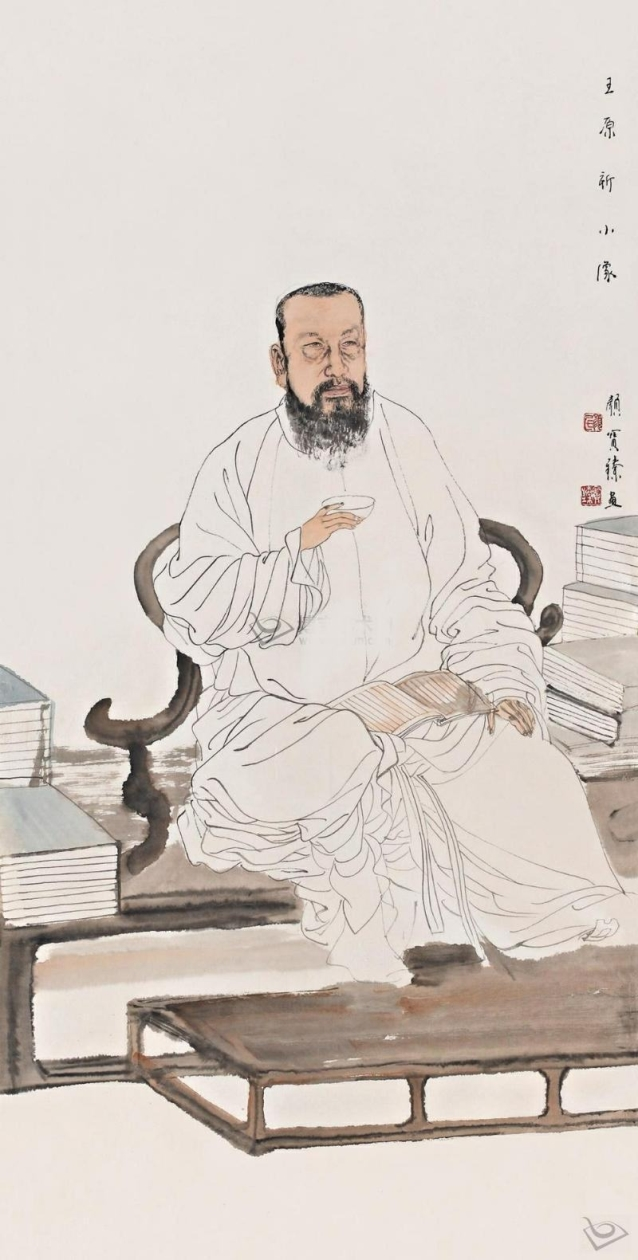
▲ Wang Yuanqi (1642–1715) was a native of Taicang, Suzhou Prefecture. His courtesy name was Maojing, and his literary names included Lutai and Shishi Daoren. Wang Yuanqi was Wang Shimin’s grandson and one of the “Four Wangs” of the Wu School of Painting.
Masterpieces of the Wu School of Painting
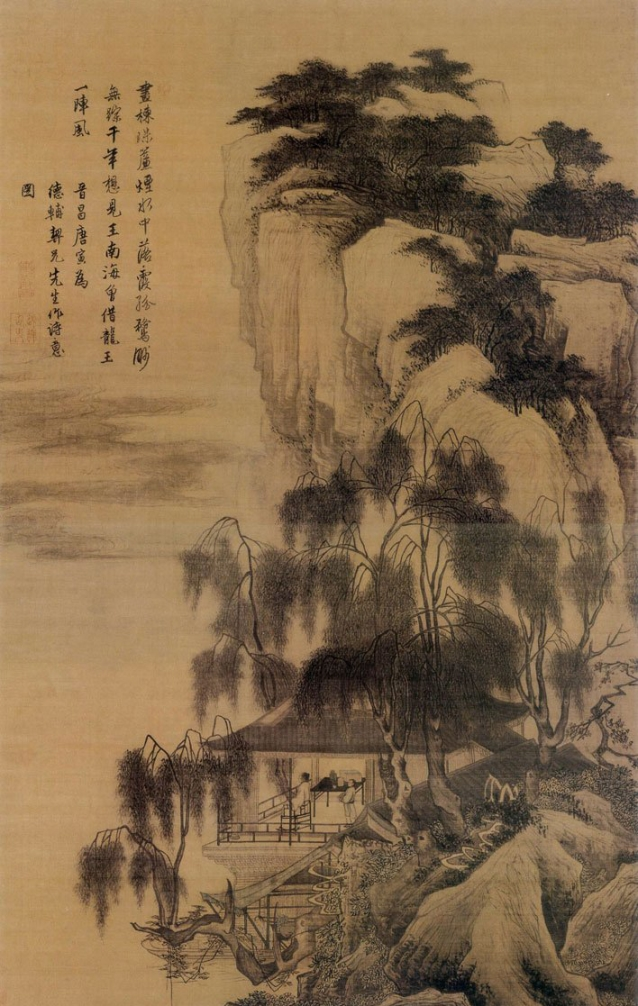
▲ “A Solitary Wild Goose against the Sunset Glow,” by the Ming-Dynasty painter Tang Yin, is a hanging scroll, ink on paper, measuring 189.1 cm in height and 105.4 cm in width. The painting is in the collection of the Shanghai Museum, China.
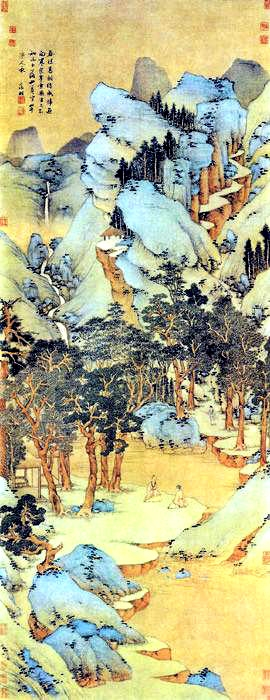
▲ “Tall Trees in the Depths of Spring,” by the Ming-Dynasty artist Wen Zhengming, is a hanging scroll, ink and color on silk, measuring 170.1 cm in height and 65.7 cm in width. It is in the collection of the Shanghai Museum.
