


Origin and Categories of Wu Songs
Wu Songs refer collectively to the folk songs and ballads of the Wu region. They are a form of oral literature created by people in the areas where Wu dialect is spoken. Suzhou is viewed as an important place of origin of and centre for the development of Wu Songs. These songs vividly document the life histories of farmers and people from lower classes in the south of the Yangtze River. Therefore, they constitute a precious intangible cultural heritage for studying the society, history, local customs, and dialect of the Wu region. Having their roots in labor of common people, Wu Songs are great in number and cover a wide range of subjects. In the Song Dynasty, Guo Maoqian compiled Yuefu Shiji (The Poetry Collection of the Music Bureau), categorizing Wu Songs under “Wu Sheng Songs” (“the folk songs popular in the south of today’s Jiangsu and the north of Zhejiang”) within the section of “Qingshang Quici” which refers to “a canonical collection of southern folk songs.” During the Ming dynasty, Feng Menglong collected a large number of Wu folk Songs popular in these areas from the Song and Yuan periods to the mid-Ming Dynasty and then compiled them into Shan Ge (literally meaning “mountain songs” but actually an equivalent for “folk songs” ) and Gua Zhi Er (The term literally means “hanging from the branch,” referring to folk ballads prevalent in the mid-to-late Ming dynasty with content that largely revolved around romance and intimacy). In the Qing Dynasty, thanks to commercially published editions, literati transcription, and oral transmission by folk artists, a substantial collection of long narrative Wu songs were well preserved. Around the May Fourth Movement, the Chen Bao Fu Kan (meaning “morning news supplement”) began to serialize Wu Songs from 1920 onward. Subsequently, collections such as Wu Ge Jia Ji (An Anthology of Wu Songs (Part A) edited by Gu Jiegang, Wu Ge Yi Ji (An Anthology of Wu Songs (Part B)edited by Wang Yizhi, Wu Ge Bing Ji (An Anthology of Wu Songs (Part C) edited by Wang Jungang, and A Brief History of Wu Songs by Gu Jiegang were successively published. Representative forms of Wu Songs include the Baimao Shan Ge (folk songs of Baimao) of Changshu, the Luxu Shan Ge of Wujiang (folk songs of Luxu), the Heyang Shan Ge of Zhangjiagang (folk songs of Zhangjiagang), the Shuangfeng Shan Ge of Taicang (folk songs of Shuangfeng), and the Shengpu Shan Ge (folk songs of Shengpu) popular in the area of the present-day Suzhou Industrial Park.
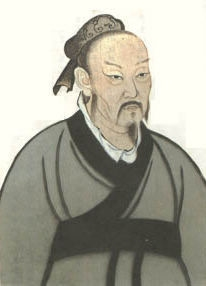
▲ The portrait features Guo Maoqian (1041–1099), styled Decan, a native of Xucheng, Yunzhou (present-day Dongping, Shandong Province) in the Northern Song dynasty. Guo’s ancestors came from Quyang of Taiyuan. His great-grandfather Guo Ning moved to Yunzhou due to an official appointment. In the seventh year of the Yuanfeng era (1084) of Emperor Shenzong’s reign, Guo Maoqian served as Facao Canjun of Henan Prefecture (the official in charge of judicial affairs, or Judge of Henan Prefecture). He compiled Yuefu Shiji (The Poetry Collection of the Music Bureau) in 100 volumes. This collection has been passed down through the ages and highly valued in academic circles for its precise explanatory notes and rigorous textual research.
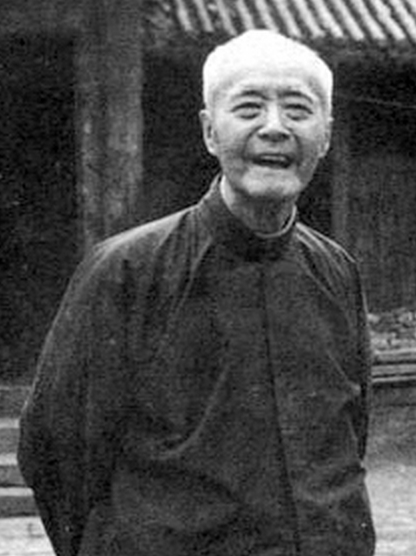
▲ Gu Jiegang (May 8, 1893—December 25, 1980), originally named Songkun, is known for his courtesy name Mingjian and the literary name Jiegang. Gu’s family nickname was Shuangqing. He used a number of pen names such as Yu Yi and Mingjian. Gu Jiegang was a native of Suzhou, Jiangsu Province. The man was a renowned modern Chinese historian, folklorist, and founder of the research school known as “Gushi-bian” (meaning “critical discussions of ancient history”). He was also a pioneer and founding father of modern historical geography and folklore studies in China.
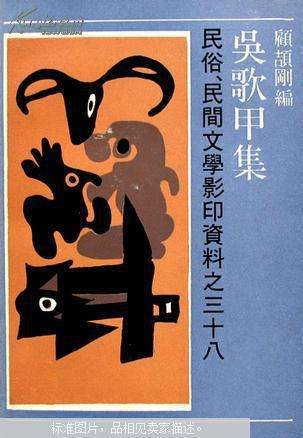
▲ The book Anthology of Wu Songs (Part A) compiled by Gu Jiegang
Wu Songs after the Founding of the People’s Republic of China
After the establishment of the People’s Republic of China, the government and cultural circles placed much emphasis on the collection, categorization, and study of folk literature. In 1952, a substantial number of folk ballads and miscellaneous tunes were collected under the guidance of the Southern Jiangsu Federation of Literary and Art Circles. The year 1958 witnessed the emergence of the movement to gather and create new folk songs. After the Folk Literature Research Society was founded in 1961, A Preliminary Compilation of Records of Suzhou Folk Literature in three volumes was edited and published over the subsequent years.
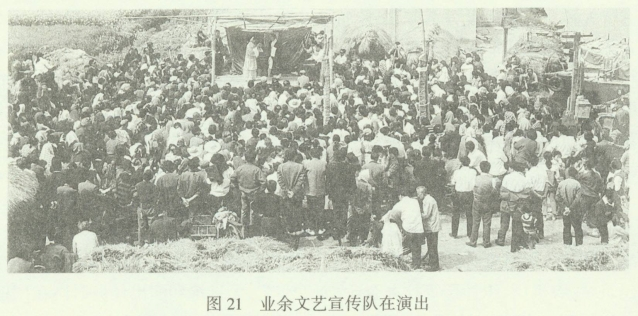
▲ The photo taken in 1979 shows the Shengpu Amateur Art and Cultural Propaganda Team gave rural outreach performances of Wu Songs.
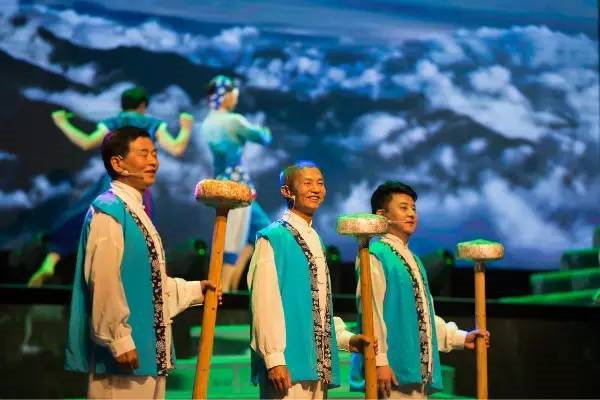
▲ A stage photo from a performance of Baimao folk songs
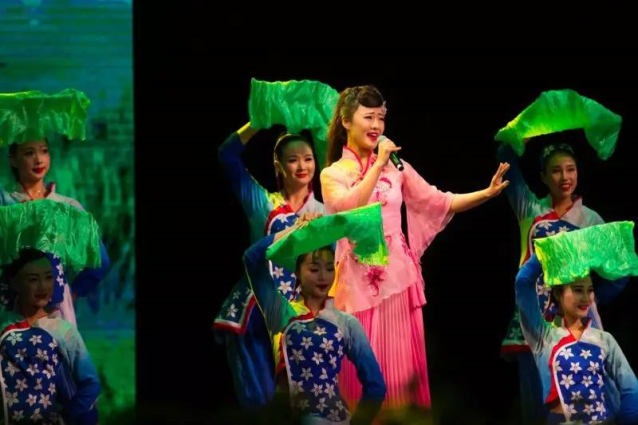
▲ A stage photo from a performance of Heyang folk songs
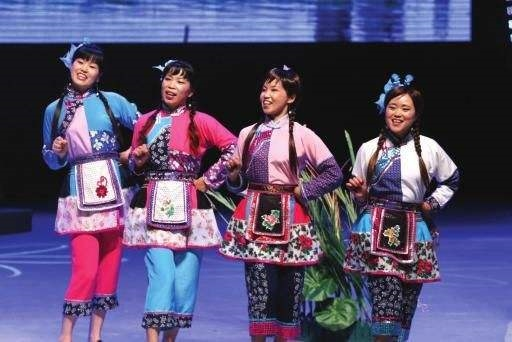
▲ A stage photo from a performance of Luxu folk songs
The Development of Wu Songs Since the Reform and Opening-Up
In the early 1980s, the collection and study of Wu Songs gained momentum in Suzhou, which led to the establishment of the Wu Songs Society in 1983. The long narrative folk song Wu Guniang (Five Maids), based on interview transcripts with the folk singer Lu Amei from Luxu, was published in journals such as Zhongshan, Shikan, and Minjian Wenxue. The story was covered by over thirty domestic and international newspapers and magazines. Wu Guniang overturned the established academic view in international folklore studies that the Han Chinese literary tradition lacked long narrative poems, and was hailed by scholars both in China and abroad as “an outstanding discovery” and “a great poetic work.” Classic pieces of Baimao folk songs from Changshu, such as Du Li Shan Ge Wan Wan Qian (literally meaning “a belly full of thousands upon thousands of folk songs”) and Kan Kan Qing Ge Kan Kan Lang (meaning “gazing at my lover, gazing at my man”) were included in textbooks for higher education. After the 1980s, Suzhou held six academic conferences on Wu Songs, accumulating a substantial body of materials and research papers. Between 1990 and 2000, quite a number of elderly singers were identified, and over thirty long narrative songs were uncovered. Among these works, relatively complete versions included Shen Qige (the seventh son of the Shens) and Wei Erlang (the second son of the Weis). These were later collated and published in periodicals or compiled into books. A manuscript of the long narrative song Bai Liujie was discovered in Changshu. In the meantime, Wu Guniang and Meng Jiangnü were included in Ten Great Folk Narrative Poems of Jiangnan edited by the Wu Songs Society. A series of books had been released, including The Essential Anthology of the Heritage of Wu Songs, The Collection of Heyang Folk Songs, and The Collection of Folk Songs of Luxu, China by the year 2005. The Baimao Folk Songs Museum and the Heyang Folk Songs Museum were founded in Changshu and Zhangjiagang respectively. Baimao and Luxu were designated as national “Hometowns of Folk Songs” and “Hometowns of Folk Songs” of Jiangsu Province. Jin Xi and many other researchers of Wu Songs have edited and published collections and studies, including A Collection of Baimao Folk Songs, A Collection of Luxu Folk Songs Collection, The Essential Anthology of the Heritage of Wu Songs, and The Wu Song Forum, which span millions of Chinese characters.
On May 20, 2006, Wu Songs were approved by the State Council to be included in the first batch of the National Intangible Cultural Heritage List, whose proposed city was Suzhou, Jiangsu Province. On June 5, 2007, designated by the Ministry of Culture (the present Ministry of Culture and Tourism), Lu Ruiying and Yang Wenying from Suzhou, Jiangsu Province, were acknowledged as representative inheritors of this cultural heritage item. They were also listed among the 226 representative inheritors of the first batch of national intangible cultural heritage projects.
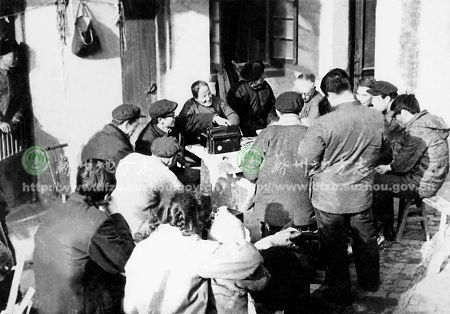
▲ In the early 1980s, researchers of folk literature discovered the long narrative Wu song Wu Guniang (Five Maids) and Zhao Shengguan during their fieldwork, challenging the established assertion that “the Han ethnic group lacks long folk songs” and causing a sensation at the time. The photo taken in 1982 shows some researchers of folk literature conducting an interview at Lu Amei’s home in Luxu, Wujiang.
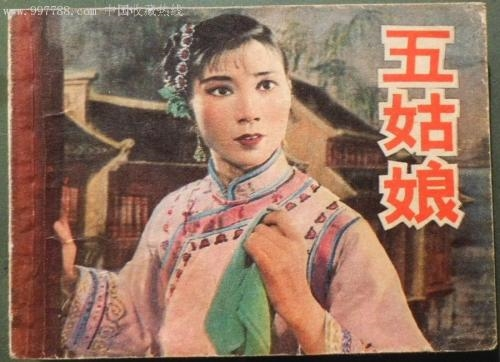
▲ A book image from the illustrated storybook Wu Guniang (Five Maids) based on its Wu Song version.
